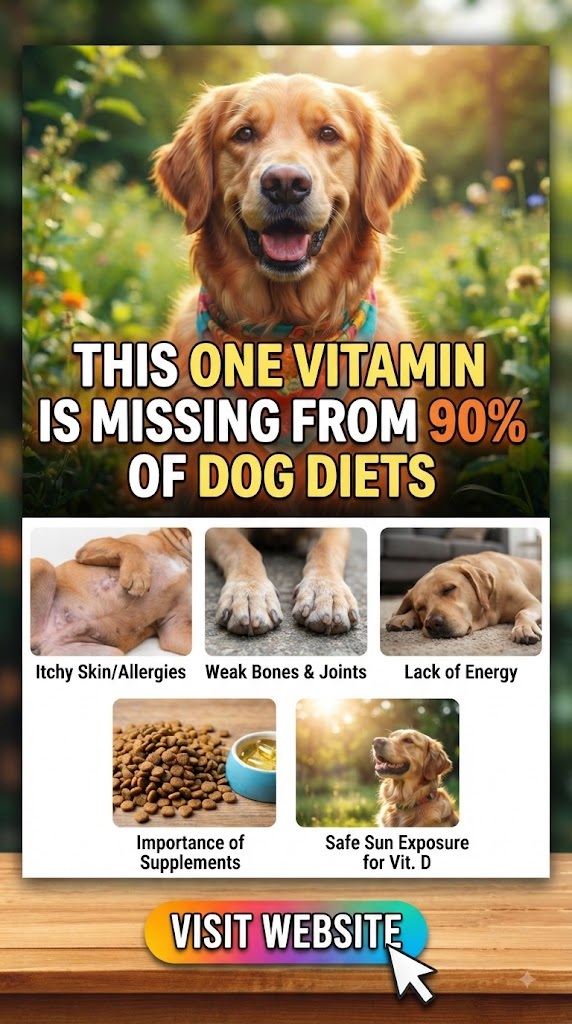
This ONE Vitamin Is Missing From 90% of Dog Diets
Executive Summary: Over 90% of home-cooked dog meals and a staggering percentage of stored commercial kibbles leave dogs critically low in Vitamin D3. Unlike humans, dogs cannot synthesize Vitamin D from sunlight. Without proper dietary levels, dogs face elevated risks of bone loss, chronic inflammation, heart weakness, and compromised immune function. Discover why this nutrient gap exists and how to safely correct it using vet-approved whole foods.
The Hidden Epidemic in Your Dog’s Bowl
Every day, millions of loving pet parents pour dry kibble into a bowl or carefully whip up a batch of chicken and rice, confident they are providing top-tier nutrition. Yet, behind shiny packaging and healthy-looking meals lies a silent, widespread deficiency.
Veterinary nutrition studies reveal that up to 95% of homemade dog diets fail to meet minimum basic nutritional standards—and the single most frequent casualty is Vitamin D (specifically Vitamin D3, cholecalciferol). Even premium commercial kibbles can suffer dramatic nutrient degradation when stored in warm pantries or processed under extreme manufacturing heat.
Why is Vitamin D deficiency so common in dogs, why does it go unnoticed for years, and how can you safeguard your dog’s health without risking dangerous over-supplementation?
The Sunlight Myth: Why Dogs Can’t “Soak Up” Vitamin D
When humans need a Vitamin D boost, we step outside. Ultra-violet (UV-B) rays hit our skin, converting a compound called 7-dehydrocholesterol into active Vitamin D3.
It is easy to assume your dog does the same while sunbathing on the living room rug. This is a biological misconception.
Dogs possess extremely low levels of 7-dehydrocholesterol in their skin. Furthermore, their dense fur coats block UV rays from reaching the skin surface. While dogs do secrete tiny trace amounts of precursor oils onto their fur that they ingest during grooming, it is nowhere near enough to meet their daily metabolic requirements.
Dogs are 100% dependent on their daily diet for Vitamin D.
┌─────────────────────────────────────────────────────────────┐
│                       HUMANS vs. DOGS                       │
├──────────────────────────────┬──────────────────────────────┤
│ Humans                       │ Dogs                         │
├──────────────────────────────┼──────────────────────────────┤
│ • Can synthesize D3 via sun  │ • CANNOT synthesize D3 via   │
│   exposure on skin           │   sunlight effectively  │
│ • Skin contains high 7-DHC   │ • Skin lacks 7-DHC precursor │
│ • Sunlight provides up to    │ • 100% reliant on dietary    │
│   90% of daily needs         │   intake                  │
└──────────────────────────────┴──────────────────────────────┘
Why 90% of Diets Miss the Mark
How does a vitamin so essential end up missing from so many canine meals? The culprit changes depending on how you feed your pet.
1. Unformulated Homemade & Fresh Diets
When dog owners switch to cooked or raw homemade diets, they often rely on muscle meats (chicken breast, ground turkey, lean beef), grains, and vegetables. While wholesome, muscle meats contain virtually zero Vitamin D. Vegetables like spinach and carrots provide zero bioavailable D3. Without specific organ meats (liver), oily fish, or precise supplementation, homemade food is almost guaranteed to be severely deficient.
2. High-Heat Kibble Manufacturing
Commercial dry food relies on extrusion—a process using extreme heat (often exceeding 200°C / 400°F) and high pressure. Fat-soluble vitamins like Vitamin D and Vitamin E are heat-sensitive. Although manufacturers add synthetic vitamin premixes after extrusion to meet Association of American Feed Control Officials (AAFCO) standards, these synthetic vitamins degrade rapidly once the bag is opened and exposed to oxygen, light, and ambient heat.
3. Gut Inflammation and Malabsorption
Even if Vitamin D is present in the bowl, chronic digestive issues, inflammatory bowel disease (IBD), low stomach acid, or pancreatic insufficiency prevent proper fat absorption. Because Vitamin D is fat-soluble, a dog with compromised gut health cannot absorb it efficiently.
Nutritional Gaps Across Common Dog Diets
The following interactive chart illustrates the average Vitamin D compliance and common micronutrient deficit rates across commercial dry kibble, unformulated homemade meals, and fresh-boosted diets:
What Does Vitamin D Actually Do in a Dog’s Body?
Vitamin D is actually a pro-hormone that regulates over 200 genes throughout the canine body. Its principal job is maintaining the delicate balance of calcium and phosphorus.
When Vitamin D levels are optimal, your dog experiences:
- Robust Skeletal Strength: Enables efficient calcium absorption in the intestines, preventing soft or brittle bones.
- Immune System Regulation: T-cells rely on Vitamin D to fight off bacterial and viral pathogens while preventing autoimmune attacks.
- Cardiovascular & Muscle Support: Plays a direct role in cardiac muscle contractility and nerve transmission.
- Cellular Health & Cancer Mitigation: Studies in veterinary oncology show a correlation between low serum 25-hydroxyvitamin D levels and an increased incidence of mast cell tumors, lymphoma, and soft tissue sarcomas.
5 Warning Signs Your Dog May Be Deficient
Vitamin D deficiency develops silently over months or years. Early signs are frequently chalked up to “getting old” or “having an off day”.
                ┌─────────────────────────────────────────┐
                │     5 SIGNS OF VITAMIN D DEFICIENCY     │
                └────────────────────┬────────────────────┘
                                     │
         ┌───────────────────┬───────┴───────┬───────────────────┐
         ▼                   ▼               ▼                   ▼
  1. Joint Stiffness   2. Dull Coat    3. Recurring       4. Muscle Loss
   & Bone Pain          & Dry Skin        Infections        & Fatigue
         │
         └───────────────────────────┬───────────────────────────┘
                                     ▼
                              5. Digestive
                                 Upset
1. Unexplained Joint Stiffness and Bone Pain
Because Vitamin D controls calcium absorption, low levels force the body to leach calcium from the bones to preserve blood calcium levels. In growing puppies, this causes rickets and bow-legged deformities. In adult dogs, it manifests as difficulty rising, unexplained limping, or stiff gait.
2. Chronic Skin Issues and Dull Coat
Vitamin D receptors are heavily concentrated in hair follicles and skin tissue. A deficiency leads to excessive shedding, brittle fur, slow wound healing, and recurrent skin infections or dandruff.
3. Recurring Infections and Weak Immunity
If your dog seems to catch every intestinal bug, respiratory virus, or ear infection, low Vitamin D could be the root cause. The immune system requires D3 to produce antimicrobial peptides.
4. Muscle Atrophy and Lethargy
Dogs suffering from low D3 display lower stamina, reluctance to play or jump into the car, and a noticeable loss of muscle mass over their back and hindquarters.
5. Chronic Digestive Upset
Low Vitamin D alters the gut microbiome and weakens the intestinal mucosal barrier, contributing to soft stools, gas, and food sensitivities.
5 Whole-Food Sources to Safely Boost Vitamin D3
Rather than rushing to buy high-dose human Vitamin D pill supplements—which can be extremely dangerous for dogs—the safest way to optimize your dog’s intake is through whole-food toppers.
| Food Source | Approx. Vitamin D3 Content | Recommended Serving / Frequency |
| Canned Sardines (in Water) | ~200 IU per 3 oz | 1–2 small sardines twice per week |
| Wild Alaskan Salmon | ~400 IU per 3 oz | 1 oz per 20 lbs body weight weekly |
| Pasture-Raised Egg Yolks | ~40–50 IU per yolk | 1 raw or lightly cooked yolk 2–3x/week |
| Beef or Chicken Liver | ~15–30 IU per oz | Max 5% of total diet daily |
| Cod Liver Oil | ~400 IU per teaspoon | Follow precise vet dosing (~1/4 tsp per 20 lbs) |
Pro Tip: When buying canned fish like sardines or mackerel, choose options packed in water with no added salt, oils, or spices.
Crucial Warning: The Danger of Over-Supplementation
While deficiency is widespread, Vitamin D toxicity is equally dangerous.
Because Vitamin D is a fat-soluble vitamin, excess amounts are stored in the liver and fat tissues rather than flushed out through urine. Over-dosing synthetic human supplements or feeding excessive cod liver oil causes hypercalcemia (abnormally high blood calcium).
Symptoms of Vitamin D Toxicity:
- Frequent, excessive thirst and urination
- Severe vomiting and loss of appetite
- Drooling and metallic breath odor
- Calcification of soft tissues (kidneys, heart, and blood vessels)
- Acute kidney failure
Rule of Thumb: Never administer human Vitamin D3 pills or synthetic canine megadoses without a simple 25-hydroxyvitamin D blood test performed by your veterinarian.
3 Steps to Optimize Your Dog’s Diet Today
Step 1: Audit Current Diet
 └─ Check bag storage (>30 days = degraded fats & vitamins)
 └─ Evaluate homemade recipes for lack of organ meats/oily fish

Step 2: Add Safe Whole-Food Boosters
 └─ Rotate sardines, cooked salmon, or egg yolks 2-3x per week

Step 3: Test Serum Levels (If Feeding Homemade)
 └─ Request a VDI (Veterinary Diagnostics Institute) Vitamin D Blood Panel
- Store Kibble Properly: Keep dry dog food in its original bag inside an airtight container in a cool, dry place. Use opened bags within 30 days to avoid nutrient oxidation.
- Rotate Whole-Food Toppers: Add a canned sardine or a raw egg yolk to your dog’s dinner bowl two to three times per week. This delivers bioavailable D3 along with Omega-3 fatty acids and choline.
- Consult a Board-Certified Veterinary Nutritionist: If you feed a homemade diet, ensure it follows a computer-balanced formulation (such as BalanceIT) that accounts for fat-soluble vitamins, calcium-to-phosphorus ratios, and trace minerals.
Frequently Asked Questions
Can dogs take human Vitamin D3 supplements?
No. Human Vitamin D3 supplements usually contain 1,000 IU to 10,000 IU per capsule, which is an extreme, toxic dose for most dogs. Always use dog-specific products or whole foods under veterinary guidance.
Can my dog get Vitamin D from sunbathing inside through a glass window?
No. Glass filters out virtually all UV-B rays. Even if glass did not filter UV-B, dogs lack the necessary cutaneous skin chemistry to synthesize Vitamin D from sunlight.
How do I know if my dog’s food has enough Vitamin D?
Check the package for an AAFCO Adequacy Statement. Commercially prepared foods labeled “Complete and Balanced for Maintenance” must meet minimum Vitamin D levels. However, if the bag is old, stored in heat, or unsealed, effective levels may drop.
Is cod liver oil safe for daily use?
Cod liver oil is very high in both Vitamin A and Vitamin D. While beneficial in precise drops, giving too much can quickly lead to Vitamin A or D toxicity. Regular fish oil (salmon or sardine oil) provides Omega-3s without the risk of fat-soluble vitamin buildup.
Final Verdict
Vitamin D3 is far more than a basic dietary bullet point—it is a foundational hormone regulator that drives bone health, immune resilience, heart performance, and longevity in dogs. Because dogs cannot rely on sun exposure, ensuring their bowl contains adequate, bioavailable Vitamin D3 is one of the most powerful steps you can take for your pet’s long-term vitality.