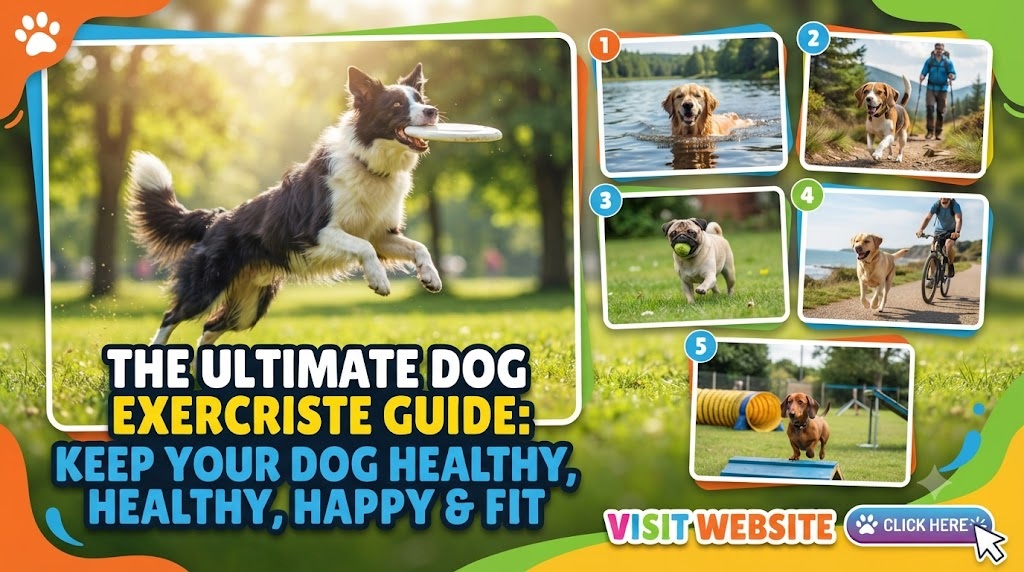
Dog Exercise: Unleashing Your Best Friend’s Potential
For most dog owners, “exercise” means a quick ten-minute stroll around the block or a few tosses of a tennis ball in the backyard. But if you’ve ever come home to a shredded sofa, a dug-up garden, or a dog that simply won’t stop pacing despite having “gone for a walk,” you’ve encountered the reality of the under-exercised canine.
Exercise is not just about burning calories; it is the cornerstone of your dog’s mental health, physical longevity, and behavioral stability. A tired dog is a happy dog, but more importantly, a tired dog is a well-behaved dog. This comprehensive guide will dive deep into the science of canine activity, from high-intensity physical training to the “mental exhaustion” techniques that are often more effective than a five-mile run.
1. The Science of Canine Energy: Why Walking Isn’t Enough
To understand how to exercise your dog, you first have to understand what a dog is. Whether you have a tiny Chihuahua or a massive Great Dane, your dog is an evolutionary masterpiece designed for movement.
The “Genetic Job” Factor
Every breed was originally bred for a purpose. Retrievers were meant to swim and fetch all day; Border Collies were bred to run miles while making complex split-second decisions; Terriers were bred to hunt and dig. When we ask these dogs to live in a suburban house with only a 15-minute walk, we are fighting against thousands of years of genetics.
The Physical-Mental Balance
Physical exercise builds muscle and cardiovascular health, but it also builds stamina. If you only run your dog, you are essentially building a “super-athlete” who will eventually require even more running to get tired. The secret to a calm dog lies in the balance between:
- Physical Stimulation: Running, jumping, swimming.
- Mental Stimulation: Problem-solving, sniffing, learning.
- Social Stimulation: Interacting with the world and other dogs.
2. Exercise Requirements by Life Stage
One size does not fit all. Forcing a puppy to run long distances can cause permanent joint damage, while assuming a senior dog wants to stay on the couch all day can lead to rapid cognitive decline and muscle atrophy.
Puppies: The “5-Minute Rule”
Puppies have boundless energy, but their growth plates are soft. Over-exercising a puppy can lead to hip dysplasia and joint issues later in life.
- The Rule: 5 minutes of formal exercise (like walking on a leash) per month of age, up to twice a day.
- Focus on: Low-impact play, socialization, and short training sessions.
- Avoid: Long runs on pavement or high-jump activities until they are at least 12–18 months old (depending on the breed size).
Adults: The Prime Years
Adult dogs vary wildly. A pug may be satisfied with 30 minutes of walking, while a Vizsla may need two hours of vigorous activity.
- Target: 30 minutes to 2 hours of daily activity.
- Focus on: Variety. Mix steady-state cardio (walking) with high-intensity bursts (fetch or flirt poles).
- 1. Why Daily Exercise Is Essential for Every Dog
- Physical health benefits
- Mental stimulation and stress relief
- Preventing obesity and chronic diseases
- Building a stronger bond with your dog
- 2. How Much Exercise Does Your Dog Really Need?
- Exercise requirements by age
- Exercise by breed and energy level
- Factors that affect activity needs
- Signs your dog needs more or less exercise
- 3. Best Types of Exercise for Dogs
- Daily walks
- Running and jogging
- Hiking adventures
- Swimming for low-impact fitness
- Fetch and frisbee games
- Tug-of-war and interactive play
- 4. Indoor Exercises for Rainy or Hot Days
- Hide-and-seek games
- Indoor obstacle courses
- Stair climbing (when appropriate)
- Puzzle toys and treat games
- Tug games and toy retrieval
- 5. Outdoor Activities Your Dog Will Love
- Nature trails
- Dog parks
- Beach adventures
- Agility training
- Backyard games
- 6. Puppy Exercise Guide
- Safe exercise limits
- Protecting growing joints
- Fun puppy games
- Socialization through play
- 7. Adult Dog Exercise Routine
- Daily walking schedule
- Cardio activities
- Strength-building games
- Mental enrichment
- 8. Senior Dog Exercise Tips
- Gentle walking routines
- Low-impact exercises
- Swimming for older dogs
- Adjusting exercise for arthritis
- 9. Exercise Plans by Dog Size
- Small Dogs
- Medium Dogs
- Large Dogs
- Giant Breeds
- 10. Breed-Specific Exercise Needs
- Working breeds
- Sporting breeds
- Herding breeds
- Toy breeds
- Brachycephalic (flat-faced) breeds
- 11. Signs Your Dog Needs More Exercise
- Excessive barking
- Destructive chewing
- Weight gain
- Hyperactivity
- Restlessness
- Attention-seeking behavior
- 12. Signs Your Dog Is Getting Too Much Exercise
- Limping
- Excessive panting
- Reluctance to walk
- Muscle soreness
- Fatigue
- Paw injuries
- 13. Safe Exercise During Hot Weather
- Best times to walk
- Preventing heatstroke
- Hydration tips
- Protecting paw pads
- 14. Cold Weather Exercise Safety
- Keeping your dog warm
- Protecting paws from snow and salt
- Indoor alternatives
- Winter hydration
- 15. Dog Walking Tips Every Owner Should Know
- Choosing the right leash
- Walking etiquette
- Safe walking routes
- Training during walks
- 16. Mental Exercise Is Just as Important
- Puzzle feeders
- Scent games
- Obedience training
- Learning new tricks
- 17. Common Dog Exercise Mistakes to Avoid
- Over-exercising puppies
- Ignoring weather conditions
- Exercising immediately after meals
- Using unsafe equipment
- Skipping warm-up and cool-down
- 18. Creating the Perfect Weekly Exercise Schedule
- Daily routine example
- Weekend activities
- Rest and recovery days
- Tracking your dog’s progress
- 19. Essential Gear for Safe Dog Exercise
- Harness vs. collar
- Long leads
- Water bottles
- Reflective gear
- Dog booties
- 20. Frequently Asked Questions About Dog Exercise
- Can dogs exercise after eating?
- How long should daily walks be?
- Can senior dogs still run?
- What’s the best exercise for overweight dogs?
- How do I know if my dog is tired?
- 21. Final Thoughts: Keeping Your Dog Healthy Through Regular Exercise
- Consistency matters
- Balance physical and mental activity
- Adjust routines as your dog ages
- When to consult your veterinarian
3. The “Sniffari” Revolution: Why the Nose is the Key to Exhaustion
If you only take one thing away from this guide, let it be this: Sniffing is more exhausting for a dog than running.
A dog’s olfactory bulb is about 40 times larger than a human’s relative to total brain size. When a dog sniffs, they are processing an incredible amount of data—who was there, what they ate, how they were feeling, and where they were going.
How to Conduct a Sniffari
- Throw Away the “Heel”: On a Sniffari, the dog is the leader. Let them choose the path.
- The “Stop and Smell the Roses” Method: If your dog wants to spend five minutes sniffing one single blade of grass, let them. Their brain is working at 100% capacity.
- Long-Line Walking: Use a 10-to-15-foot lead (not a retractable one) to give them the freedom to explore while remaining safe.
Ten minutes of intense sniffing can be equivalent to an hour-long walk in terms of the mental fatigue it produces.
4. High-Intensity Training (HIT) for High-Energy Breeds
For those with “working” breeds like Malinois, Huskies, or Labs, a walk is just a warm-up. These dogs need to get their heart rate up.
The Flirt Pole: A Game Changer
Think of a flirt pole as a giant cat toy for dogs. It’s a long pole with a rope and a lure (toy) at the end.
- Why it works: It taps into the dog’s predatory drive (chase and catch).
- The Benefit: 10 minutes of flirt pole play in a small backyard can tire a dog out more than a 30-minute game of fetch.
- Safety Tip: Keep the lure low to the ground to prevent your dog from jumping and landing awkwardly, which can cause ACL tears.
Agility and Obstacle Courses
You don’t need a professional setup to do agility. Use household items:
- Use a broomstick over two boxes as a jump.
- Use cones or water bottles for a weave pole setup.
- Use an old pop-up tunnel for kids. This forces the dog to think about where their feet are (proprioception) while they move.
Canicross and Bikejoring
If you are a runner or a cyclist, involve your dog.
- Canicross: Cross-country running with your dog attached to your waist via a bungee lead. It encourages the dog to pull slightly, engaging their core and hindquarters.
- Bikejoring: Similar to canicross but with a bicycle. This is only for highly trained dogs with excellent “stop” and “turn” cues.
5. Indoor Exercise: Winning the Rainy Day Blues
When the weather is terrible, your dog’s energy doesn’t just disappear. You need indoor strategies that don’t involve destroying the living room.
Stairway to Heaven (and Tiredness)
If you have carpeted stairs, use them. Standing at the top and tossing a toy to the bottom (and calling the dog back up) is an incredible glute and cardio workout. Note: Avoid this for breeds prone to back issues, like Dachshunds.
Indoor Hide and Seek
Hide yourself or your dog’s favorite toy in the house. This combines movement with “search and find” mental work. Start easy and gradually make the hiding spots more difficult.
The “Muffin Tin” Game
Put treats in the holes of a muffin tin and place tennis balls over the top. Your dog has to figure out how to remove the balls to get to the treats. It’s a simple, low-cost puzzle that keeps them occupied.
Treadmill Training
Many dogs can be trained to walk on a human treadmill.
- Never tie your dog to the treadmill.
- Never leave them unsupervised.
- Start at the lowest possible speed and use lots of treats to build a positive association.
6. Mental Stimulation: “Brain Games” to Stop Destructive Behavior
Destructive behavior (chewing, barking, digging) is almost always a symptom of boredom. If the brain isn’t busy, it will find its own “work”—and you probably won’t like the results.
Enrichment Feeders
Stop feeding your dog out of a bowl. A bowl of food is a wasted opportunity for exercise.
- Slow Feeders: Make them work for each kibble.
- Stuffed Kongs: Freeze them to make the “job” last longer.
- Snuffle Mats: A fabric mat with felt “grass” that hides dry food. It mimics the natural foraging behavior.
Scent Work (Nose Work)
You can teach your dog to find specific scents (like birch oil or even just their favorite treats) hidden around the house. This is the “professional” version of hide and seek and is used for search-and-rescue training. It is incredibly taxing on their nervous system and will lead to a long, deep nap.
7. Urban Exercise: Navigating the City Jungle
Living in an apartment or a city with limited green space presents unique challenges.
Parkour (Urban Agility)
The city is your playground. Teach your dog to:
- Put their “two paws up” on a park bench.
- Balance on a low retaining wall.
- Weave through bike racks.
- Crawl under a bench. This turns a boring city walk into a physical and mental challenge.
“Place” Work in High-Distraction Areas
Take your dog to a busy sidewalk or an outdoor cafe. Ask them to stay on a portable mat (“Place”) while the world goes by. Resisting the urge to chase a pigeon or greet a stranger is a massive mental workout. Self-control is exhausting!
8. Safety and Recovery: The Overlooked Essentials
Just like human athletes, dogs can overdo it. Pushing a dog too hard can lead to heatstroke, pad injuries, and long-term joint damage.
The Dangers of “Ball Addiction”
Some dogs (especially Collies and Terriers) will chase a ball until they collapse. They are so driven by adrenaline that they mask their own pain and exhaustion.
- The Sign: Heavy panting where the tongue is wide and “spatulated.”
- The Fix: You must be the one to end the game. Don’t wait for the dog to quit.
Heat Stroke Awareness
Dogs don’t sweat; they pant. This is a much less efficient way to cool down.
- Avoid exercise in temperatures above 80°F (27°C) if the humidity is high.
- The Pavement Test: Place the back of your hand on the asphalt for 7 seconds. If it’s too hot for you, it’s too hot for their paws.
- Carry water and a collapsible bowl on every summer outing.
The Warm-Up and Cool-Down
Before intense activity, do 5 minutes of loose leash walking to get the blood flowing. After a run, don’t just put the dog in the car or a crate. Walk them slowly for 5–10 minutes to prevent muscle stiffness and allow their heart rate to return to normal.
9. A Sample 7-Day “Variety” Routine
If you want a perfectly balanced dog, try this weekly rotation. It ensures all needs—physical, mental, and social—are met.
- Monday: Long “Sniffari” (45 mins). Focus on letting the dog lead.
- Tuesday: High-Intensity Play (15 mins Flirt Pole or Fetch) + Evening Puzzle Toy.
- Wednesday: Training Day. 20 minutes of learning new tricks or refining old ones.
- Thursday: Adventure Walk. Go to a new trail, a new park, or a different neighborhood. New smells = New brain activity.
- Friday: Social or Urban Day. Visit a dog-friendly store or meet a dog friend for a “play date.”
- Saturday: Endurance Day. A long hike or a jog (age and breed permitting).
- Sunday: Rest and Enrichment. Lick mats, long-lasting chews, and lots of cuddles.
10. Conclusion: The “Exercise” Lifestyle
Exercise is not a chore to check off your list; it is the primary way you bond with your dog. When you engage in these activities, you aren’t just managing their energy—you are communicating with them. You are telling them that you understand their needs and their nature.
By mixing the physical (the “body work”) with the mental (the “brain work”), you will see a transformation in your dog. Their anxiety will decrease, their focus will increase, and that “unruly” behavior will vanish, replaced by the calm, confident companion you’ve always wanted.
Now, grab that leash, grab some treats, and go let your dog use their nose. Your sofa will thank you.