Survival Guide: Protecting Your Dog from the Silent Summer Killer (Heatstroke)
As the mercury rises and the sun begins to bake the pavement, dog owners around the world prepare for outdoor adventures, beach trips, and backyard BBQs. But beneath the joy of summer lies a lethal threat that can claim a dog’s life in less than fifteen minutes. Unlike humans, who have a sophisticated cooling system involving sweat glands across nearly every inch of skin, dogs are biologically disadvantaged when it comes to heat.
Heatstroke (hyperthermia) is not just “getting too hot.” It is a systemic failure where the body’s core temperature rises to a point where internal organs begin to cook, cells break down, and the brain swells. For a dog, the line between “having fun in the sun” and a life-threatening emergency is razor-thin.
This comprehensive guide will dive deep into the science of canine thermoregulation, the subtle warning signs most owners miss, and the modern strategies to ensure your furry best friend survives the hottest months of the year.
1. The Biology of Heat: Why Dogs are at a Disadvantage
How Dogs Cool Down
- Panting (Evaporative Cooling): This is a dog’s primary cooling mechanism. By breathing rapidly, they move air over the moist surfaces of the tongue and lungs, evaporating moisture and cooling the blood. However, if the air is too humid, evaporation cannot occur, rendering panting useless.
- Vasodilation: Dogs dilate the blood vessels in their face and ears to bring warm blood closer to the surface.
- Paw Pads: Dogs do have sweat glands in their paws, but these are primarily for grip and scent marking, providing negligible cooling benefits.
The Critical Temperature
A dog’s normal body temperature ranges from 101°F to 102.5°F (38.3°C to 39.2°C). Once a dog’s internal temperature hits 106°F (41°C), they have entered the danger zone of heatstroke. At this point, the body can no longer compensate, and multi-organ dysfunction begins.
2. The Red Flags: Signs of Heatstroke You Can’t Ignore
Heatstroke doesn’t always look like a dog collapsing. Often, it begins with subtle behavioral changes. Recognizing these early “Stage 1” symptoms can save your dog’s life before irreversible damage occurs.
Early Warning Signs
- Excessive, Heavy Panting: The panting sounds louder, harsher, and more desperate than usual.
- Hyper-Salivation: Look for thick, ropy, or stringy drool. This indicates the dog is trying to ramp up evaporative cooling but is becoming dehydrated.
- Bright Red Gums and Tongue: In the early stages, the mucous membranes become dark red as the body tries to flush blood to the surface.
- The “Wide-Eyed” Look: Dogs in the beginning stages of heat stress often appear anxious or panicked
- 1. What Is Heatstroke in Dogs?
- Understanding canine heatstroke
- Why dogs overheat faster than humans
- How heatstroke affects your dog’s body
- 2. Why Heatstroke Is a Serious Emergency
- The dangers of high body temperature
- Organs affected by heatstroke
- Why immediate action is critical
- 3. Which Dogs Are Most at Risk?
- Puppies and senior dogs
- Brachycephalic (flat-faced) breeds
- Overweight and obese dogs
- Thick-coated breeds
- Dogs with heart or respiratory conditions
- 4. Common Causes of Heatstroke in Dogs
- Leaving dogs in parked cars
- Excessive exercise in hot weather
- Lack of shade and fresh water
- High humidity and poor ventilation
- Hot pavement and outdoor surfaces
- 5. Early Warning Signs of Heatstroke
- Excessive panting
- Drooling more than usual
- Bright red gums
- Rapid heartbeat
- Extreme thirst
- Weakness and tiredness
- 6. Severe Symptoms That Require Immediate Veterinary Care
- Vomiting or diarrhea
- Difficulty breathing
- Confusion or disorientation
- Loss of coordination
- Collapse
- Seizures
- Unconsciousness
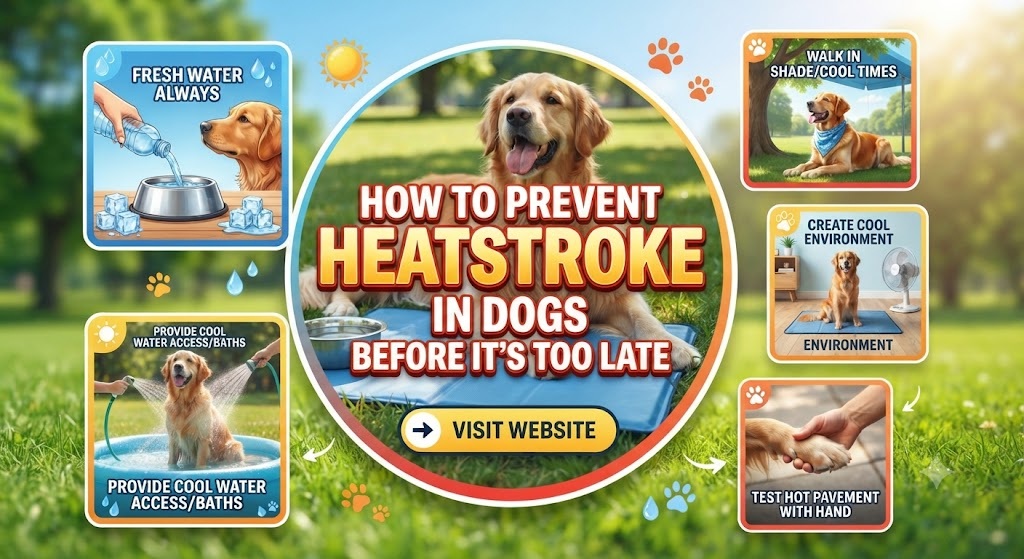
- 7. How to Prevent Heatstroke in Dogs
- Walk during cooler hours
- Always provide clean, cool water
- Create shaded resting areas
- Never leave your dog in a parked car
- Limit strenuous exercise
- Use cooling mats or cooling vests
- Keep indoor spaces well-ventilated
- 8. Summer Safety Tips Every Dog Owner Should Follow
- Check pavement temperature before walks
- Carry water on every outing
- Take frequent rest breaks
- Watch weather forecasts
- Avoid peak afternoon heat
- 9. First Aid: What to Do If Your Dog Has Heatstroke
- Move your dog to a cool area
- Offer small amounts of cool water
- Use cool (not ice-cold) water on the body
- Turn on fans to improve cooling
- Contact a veterinarian immediately
- Transport your dog safely
- 10. What NOT to Do During Heatstroke
- Don’t use ice baths
- Don’t force your dog to drink
- Don’t delay veterinary treatment
- Don’t assume your dog has recovered completely
- 11. Heatstroke Prevention Checklist
- Fresh water available
- Plenty of shade
- Safe walking times
- Cooling products ready
- Emergency vet contact saved
- 12. Frequently Asked Questions About Heatstroke in Dogs
- How hot is too hot for dogs?
- Can dogs recover from heatstroke?
- Which breeds are most vulnerable?
- How long can dogs stay outside in hot weather?
- 13. Final Thoughts
- Key takeaways for preventing heatstroke
- Building safe summer habits
- When to seek emergency veterinary care immediately.
3. High-Risk Groups: Is Your Dog a Target?
While any dog can suffer from heatstroke, certain factors make some dogs “ticking time bombs” in the summer heat.
Brachycephalic Breeds (The Flat-Faced Dogs)
French Bulldogs, Pugs, English Bulldogs, Boxers, and Shih Tzus have shortened airways. Their ability to pant effectively is severely compromised. For these breeds, even a walk in 80°F (27°C) weather can be fatal.
The Double-Coat Myth
Many owners think shaving a Husky or a Golden Retriever helps them stay cool. This is a dangerous mistake. A dog’s double coat acts as insulation against the heat, much like the insulation in a house. Shaving them removes their natural protection against UV rays and heat, making them more prone to heatstroke and sunburn.
The “Hidden” Vulnerables
- Senior Dogs: Aging hearts and lungs can’t pump blood to the surface as efficiently.
- Puppies: They haven’t fully developed their thermoregulation abilities.
- Obese Dogs: Extra fat acts as an internal parka, trapping heat and putting massive strain on the heart.
- Dogs with Health Issues: Specifically those with heart disease, laryngeal paralysis, or respiratory issues.
4. The 7 Deadly Mistakes Owners Make
Most cases of heatstroke are entirely preventable. They usually occur because of a lapse in judgment or a misunderstanding of how heat works.
1. The “Quick Trip” to the Store
Leaving a dog in a car is the #1 cause of heatstroke deaths. Even with the windows cracked and the temperature at 70°F outside, the interior of a car can reach 100°F in 10 minutes and 120°F in 30 minutes. A car acts like a greenhouse, trapping infrared radiation.
2. Ignoring the “5-Second Rule”
Asphalt and sand can reach temperatures of 140°F+, which can cause second-degree burns on paw pads in seconds. If it’s too hot for your bare hand for 5 seconds, it’s too hot for their paws. Furthermore, the heat radiating off the ground is only inches away from your dog’s belly, cooking them from below.
3. Midday Exercise
Exercising your dog between 10:00 AM and 4:00 PM is a recipe for disaster. During high humidity, the cooling effect of panting is reduced by nearly 90%.
4. Relying on “Natural” Shade
Shade moves. A dog tied up in the shade at 10:00 AM might be in direct, blistering sun by noon. Never tether a dog outdoors in the summer.
5. Overestimating Water Needs
Owners often provide a bowl of water but forget that it gets warm quickly. Dogs won’t drink hot water even if they are dehydrated. Furthermore, if the water bowl is plastic and sits in the sun, it can leach chemicals and become a breeding ground for bacteria.
6. Muzzle Usage
Traditional sleeve muzzles prevent a dog from opening their mouth to pant. Using a restrictive muzzle in the heat is essentially a death sentence. Always use a “basket muzzle” that allows for a full pant.
7. Following the Human Pace
Dogs are “people pleasers.” A dog will often run until they collapse just to keep up with their owner on a bike or a run. They won’t tell you they’re overheating until it’s too late.
5. Emergency First Aid: What to Do Before the Vet
If you suspect your dog has heatstroke, every second counts. Your goal is to lower the body temperature gradually but immediately.
Step 1: Move to a Cool Environment
Get the dog out of the sun and into an air-conditioned room or in front of a powerful fan.
Step 2: Use Tepid Water (NOT Ice Cold)
CRITICAL: Never use ice-cold water or ice baths. This causes the peripheral blood vessels to constrict (narrow), which actually traps the heat in the core of the body. It can also cause the dog to go into shock.
- Use lukewarm or room-temperature water.
- Wet the dog thoroughly, focusing on the “heat exchange” areas: the groin, the armpits, and the neck.
Step 3: Airflow is Key
Wetting the dog isn’t enough; you need evaporation. Place the wet dog directly in front of a fan. This mimics the cooling process of sweating.
Step 4: Offer Water (Don’t Force It)
If the dog is conscious, offer cool (not cold) water. Do not force-feed water into their mouth, as they may inhale it into their lungs, causing aspiration pneumonia.
Step 5: Monitor the Temperature
If you have a rectal thermometer, check the temperature. Once it hits 103°F, STOP the cooling process. If you continue cooling past this point, the dog’s temperature can plummet into hypothermia.
Step 6: Get to the Vet Immediately
Even if the dog seems “fine” after cooling down, they are not out of the danger zone. Internal organ damage (especially to the kidneys and liver) often manifests 24 to 48 hours later.
6. Proactive Prevention Hacks and Gear
Modern technology and a bit of creativity can make summer much safer for your canine companion.
High-Tech Gear
- Cooling Vests: These utilize evaporative cooling. You soak the vest in water, and as it evaporates, it pulls heat away from the dog’s body.
- Elevated Pet Beds: These allow air to circulate under the dog, preventing them from overheating while lying down.
- Pressure-Activated Cooling Mats: These mats contain a non-toxic gel that absorbs body heat without needing electricity or water.
- Insulated Water Bottles: Look for stainless steel bottles with built-in bowls that keep water ice-cold for 24 hours.
Smart Walking Strategies
- The “Vampire Schedule”: Walk your dog before sunrise and after sunset.
- Grass Only: Stick to grassy trails rather than sidewalks or roads.
- Boots for Paws: If you must walk on hard surfaces, invest in heat-reflective dog boots.
Hydration Creativity
- Doggy Popsicles (“Puppycicles”): Freeze low-sodium chicken broth, blueberries, and watermelon in ice cube trays.
- Goat Milk Ice: Goat milk is easier for dogs to digest than cow milk and provides electrolytes.
- Add Water to Food: Switch to wet food or add water to their kibble during heatwaves to ensure they are getting extra fluids.
7. Creative Summer Fun: Safe Ways to Play
You don’t have to lock your dog inside all summer. You just have to change the way you play.
The “Splash Pad” Revolution
Traditional plastic kiddie pools are great, but many dogs prefer “doggy splash pads”—shallow mats that spray water upwards. This keeps the dog moving and ensures they are constantly being hit with fresh, cool water.
Indoor Scent Work
When it’s 100°F outside, exercise the brain instead of the body. Hide treats around the house and have your dog find them. Twenty minutes of “nose work” is mentally as tiring as a one-hour walk but can be done in the AC.
Early Morning Beach Trips
The beach is high-risk due to the lack of shade and the heat-absorbing sand. If you go, go at 6:00 AM. Bring a pop-up tent and plenty of fresh water (drinking saltwater causes severe dehydration and sodium poisoning).
8. Humidity: The Overlooked Threat
Many owners check the temperature but ignore the Heat Index. Humidity is arguably more dangerous than dry heat for dogs.
When the humidity is high (above 70%), the moisture in the air prevents the moisture on the dog’s tongue from evaporating. If the moisture can’t evaporate, no heat is exchanged. In high-humidity areas (like the Southern US or Southeast Asia), a dog can suffer heatstroke at 80°F just as easily as they could at 100°F in a desert.
The Rule of Thumb: If the sum of the temperature (Fahrenheit) and the humidity percentage is over 150, exercise should be extremely limited. (e.g., 80°F + 80% humidity = 160. Stay inside!).
9. Traveling with Your Dog in Summer
Summer is the season of road trips, but traveling presents unique risks.
- AC is Not Enough for the Trunk: Most SUVs don’t have great airflow in the very back (the cargo area). If your dog is in a crate in the back, they may be 10 degrees warmer than you are in the front seat. Use a fan clipped to the crate.
- Break Every Hour: During stops, offer water and a chance to pee on grass. Never leave them in the car for even a minute during a rest stop.
- The “Wet Towel” Trick: If the AC in your car is struggling, place a damp towel over the dog’s crate to help create a mini-evaporative cooling system.
10. Summary: Your Summer Safety Checklist
To wrap up, here is your “cheat sheet” for dog safety this summer:
- Always carry water and a portable bowl.
- Avoid pavement; if it’s hot for your hand, it’s hot for their paws.
- Monitor breathing; heavy, rasping panting means “Go Inside Now.”
- Know your dog’s breed risks (Brachycephalic = high risk).
- Never shave a double-coated dog.
- Use tepid water and fans for emergency cooling, never ice.
- Check the Heat Index, not just the temperature.
- When in doubt, stay in. Your dog doesn’t mind missing a walk if it means staying alive.
Heatstroke is a terrifying and fast-acting condition, but with the right knowledge, it is 100% preventable. Be your dog’s advocate. They don’t know when the heat is becoming dangerous—they only know they want to be with you. It’s up to you to keep them safe, cool, and hydrated so you can enjoy many more summers together.