
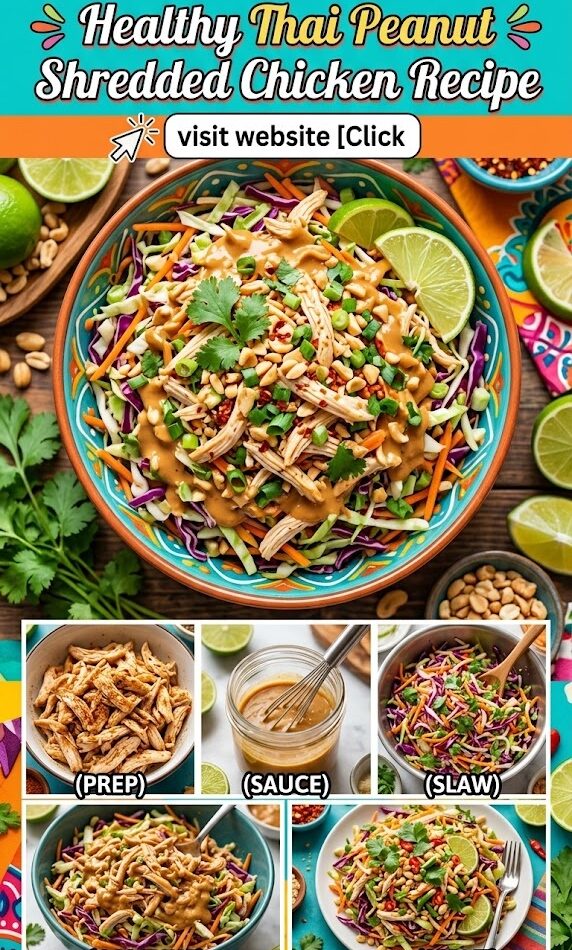
In the landscape of modern healthy eating, few things are as universally beloved as the vibrant, complex, and deeply satisfying flavors of Thai-inspired cuisine. Among the pantheon of quick, nutritious, and high-protein meals, the Healthy Thai Peanut Shredded Chicken stands as a champion. This isn’t just a recipe; it’s a versatile culinary tool that bridges the gap between gourmet flavor and practical meal planning.
Whether you are a busy professional looking for a 20-minute weeknight dinner, a fitness enthusiast seeking a high-protein punch, or a home cook wanting to impress guests with exotic aromas, this guide provides everything you need to master the art of the peanut-shredded chicken.
The Allure of Thai Flavors: Why Peanut Sauce Reigns Supreme
Thai cuisine is built upon the delicate balance of five fundamental tastes: sweet, salty, sour, bitter, and spicy. The legendary “peanut sauce” (often referred to as Satay sauce in its traditional form) encapsulates this balance perfectly.
While many store-bought peanut sauces are laden with refined sugars, hydrogenated oils, and excessive sodium, a homemade “healthy” version utilizes the natural fats of the peanut, the zest of fresh citrus, and the fermented depth of tamari or fish sauce to create a profile that is both decadent and nourishing. When this sauce meets tender, slow-cooked or pressure-cooked chicken breast, the result is a succulent, flavor-packed protein that can be used in a dozen different ways.
The Essential Ingredients: A Deep Dive
To achieve the perfect Healthy Thai Peanut Shredded Chicken, the quality of your ingredients is paramount. Let’s break down the components that make this dish a nutritional powerhouse.
1. The Protein: Chicken Breast vs. Thighs
For a “healthy” designation, boneless, skinless chicken breasts are the standard due to their low-fat content and high protein density. However, if you prefer a richer flavor and more moisture, boneless, skinless thighs are an excellent alternative. The shredding process works beautifully for both, though breasts tend to provide cleaner, longer strands.
2. The Base: Natural Peanut Butter
Look for “drippy” peanut butter where the only ingredients are peanuts and salt. Avoid brands with added palm oil or cane sugar. The natural oils in high-quality peanut butter provide heart-healthy monounsaturated fats and a much more intense nut flavor.
3. The Aromatics: Garlic, Ginger, and Shallots
Never underestimate the power of fresh aromatics.
- Fresh Ginger: Adds a zesty, warming heat and aids digestion.
- Fresh Garlic: Provides a pungent backbone and immune-boosting properties.
- Shallots or Red Onion: Offer a subtle sweetness that balances the saltiness of the sauce.
4. The “Liquid Gold”: Coconut Milk
To achieve that velvety texture without heavy cream, we use canned coconut milk. For a lighter version, “lite” coconut milk works well, but for the most authentic mouthfeel, full-fat coconut milk (used sparingly) provides the necessary medium for the spices to bloom.
5. The Acid: Lime Juice and Rice Vinegar
Acid is what “lifts” the dish. Freshly squeezed lime juice provides a bright, citrusy punch, while unseasoned rice vinegar adds a mild, fermented tang that cuts through the richness of the peanut butter.
6. The Salt and Umami: Tamari or Liquid Aminos
To keep the dish gluten-free and lower in sodium than traditional soy sauce, tamari or coconut aminos are the preferred choices. They provide the “umami” factor—the savory depth that makes the sauce addictive.
Step-by-Step Instructions: Three Methods of Perfection
Depending on your schedule and the kitchen gadgets at your disposal, there are three primary ways to prepare this recipe.
Method 1: The Instant Pot (The Fastest Way)
The Instant Pot is the king of shredded chicken. It uses high pressure to force moisture into the muscle fibers of the chicken, making it incredibly easy to shred in under 30 minutes.
- Sauté the Aromatics: Turn the Instant Pot to the “Sauté” setting. Add a teaspoon of coconut oil and sauté minced garlic, ginger, and shallots for 2 minutes until fragrant.
- Whisk the Sauce: In a separate bowl, whisk together 1/2 cup peanut butter, 1/2 cup coconut milk, 3 tbsp tamari, 1 tbsp honey (or maple syrup), 1 tbsp red curry paste, and the juice of one lime.
- Layer the Chicken: Place 1.5 lbs of chicken breasts into the pot. Pour the peanut sauce over the chicken, ensuring it is well-covered.
- Pressure Cook: Seal the lid and set to “Manual High Pressure” for 10 minutes.
- Release and Shred: Allow a natural pressure release for 5 minutes, then vent the remaining steam. Remove the chicken, shred it with two forks, and toss it back into the sauce to soak up every drop of flavor.
Method 2: The Slow Cooker (Maximum Infusion)
If you want the flavors to develop deeply over several hours, the Crockpot is your best friend.
- Prep: Place the chicken breasts at the bottom of the slow cooker.
- Sauce: Mix all your sauce ingredients and pour them over the chicken.
- Cook: Set the slow cooker to “Low” for 4 to 6 hours or “High” for 2 to 3 hours.
- Shred: Once the chicken is fork-tender, shred it directly in the pot. The long cooking time allows the peanut oils to emulsify perfectly with the chicken juices.
Method 3: The Stovetop (No Gadget Required)
- Poach: Place chicken in a large skillet or pot. Cover with water or chicken broth and simmer for 12-15 minutes until cooked through.
- Make Sauce: While the chicken simmers, whisk the peanut sauce ingredients in a small saucepan over low heat until smooth.
- Combine: Shred the cooked chicken and toss it into the saucepan with the warm peanut sauce. Add a splash of the poaching liquid if the sauce is too thick.
Nutritional Breakdown: Why This Recipe is “Healthy”
When we talk about “Healthy” Thai Peanut Shredded Chicken, we are looking at a balanced macro-nutrient profile.
- High Protein: Essential for muscle repair and satiety. One serving typically provides 30-35g of protein.
- Healthy Fats: The monounsaturated fats from peanut butter and medium-chain triglycerides (MCTs) from coconut milk support brain health and hormonal balance.
- Anti-Inflammatory: Ginger and garlic are well-known for their ability to reduce inflammation in the body.
- Low Glycemic Index: By using natural sweeteners like honey or skipping the sugar altogether, this recipe prevents the insulin spikes associated with traditional takeout.
Creative Serving Suggestions: Move Beyond the Bowl
The true magic of this shredded chicken lies in its versatility. You can prepare a large batch on Sunday and eat it in different ways all week long.
1. Thai Peanut Chicken Salad
Toss the cold shredded chicken with a mix of shredded red cabbage, carrots, cilantro, and edamame. Add a crunch with toasted cashews or extra peanuts. This is a perfect low-carb, high-fiber lunch.
2. Peanut Chicken Lettuce Wraps
Use large Bibb or Romaine lettuce leaves as “taco shells.” Fill them with the warm peanut chicken, pickled cucumbers, and a drizzle of Sriracha. It’s light, refreshing, and incredibly satisfying.
3. The Ultimate Buddha Bowl
Layer quinoa or jasmine rice at the bottom of a bowl. Top with the shredded chicken, steamed broccoli, roasted sweet potatoes, and a generous squeeze of lime. This provides a complex carbohydrate source to keep your energy levels stable.
4. Zucchini Noodle (Zoodle) Stir-Fry
For a grain-free pasta alternative, toss the chicken with lightly sautéed zucchini noodles. The peanut sauce acts as the perfect “pasta sauce,” clinging to the noodles beautifully.
5. Thai Peanut Chicken Tacos
Fusion at its finest! Use corn tortillas, add the chicken, and top with a slaw made of lime juice, honey, and shredded kale.
Pro-Tips for the Best Shredded Chicken
- The Stand Mixer Hack: If you have a large batch of chicken, place the warm cooked breasts in the bowl of a stand mixer with the paddle attachment. Turn it on low for 30 seconds. You will have perfectly shredded chicken without the arm workout.
- Control the Consistency: If your sauce is too thick, don’t just add water. Use a splash of coconut milk or chicken bone broth to maintain the flavor profile.
- The “Blooming” Secret: If you are using red curry paste, sauté it in a little oil for 1 minute before adding the other sauce ingredients. This “blooms” the spices, releasing their full aromatic potential.
- Texture Matters: Don’t forget the garnish! Fresh cilantro, sliced green onions, and crushed roasted peanuts provide the necessary textural contrast to the soft, shredded meat.
Mastering the Peanut Sauce: Troubleshooting Common Issues
Sometimes, the sauce might not behave. Here is how to fix it:
- Issue: The sauce is breaking/oily.
- Fix: This usually happens if the heat is too high. Whisk in a teaspoon of warm water or a squeeze of lime juice and stir vigorously to re-emulsify.
- Issue: It’s too salty.
- Fix: Add a bit more honey or a splash of rice vinegar. The sweetness and acidity will counteract the salt.
- Issue: It’s too bland.
- Fix: You likely need more acid or more heat. Add another squeeze of lime or a teaspoon of Sriracha/Chili Garlic Sauce.
Meal Prep and Storage Guide
This recipe is a meal prepper’s dream because it actually tastes better the next day as the chicken continues to marinate in the sauce.
- Refrigeration: Store in an airtight container for up to 4 to 5 days.
- Freezing: This chicken freezes exceptionally well. Place it in a freezer-safe bag, squeeze out the air, and freeze for up to 3 months. To reheat, thaw overnight in the fridge and warm through on the stovetop.
- Reheating Tip: Peanut sauce tends to thicken when cold. When reheating, add a tablespoon of water or broth to loosen the sauce back to its original creamy consistency.
The Science of Flavor Pairing: Why This Works
Ever wonder why peanut butter and lime taste so good together? It’s science. Peanut butter is high in fat and protein, which coats the palate. Lime juice contains citric acid, which acts as a “cleanser,” cutting through the heavy fats and refreshing the taste buds. Meanwhile, the capsaicin in the chili paste stimulates the heat receptors, and the honey provides a soothing contrast. This “flavor loop” ensures that every bite is as exciting as the first.
Frequently Asked Questions (FAQs)
Is this recipe Keto-friendly?
Yes, with one minor adjustment. Simply swap the honey or maple syrup for a keto-approved sweetener like monk fruit or erythritol, or omit the sweetener entirely. Use full-fat coconut milk to keep the fat macros high.
Can I make this vegan?
Absolutely. Instead of chicken, use extra-firm pressed tofu, tempeh, or canned young green jackfruit. The jackfruit, in particular, has a texture very similar to shredded chicken.
What can I use if I have a peanut allergy?
Almond butter or cashew butter are excellent substitutes that provide a similar creamy texture. For a nut-free version, sunflower seed butter (SunButter) works, though the flavor profile will be more earthy.
Is red curry paste necessary?
While not strictly necessary, it adds the “Thai” essence. If you don’t have it, you can substitute it with a mix of chili powder, cumin, and a pinch of coriander, though the flavor will be less authentic.
The Health Benefits of Key Spices
- Turmeric (often found in curry paste): Contains curcumin, a potent antioxidant and anti-inflammatory.
- Coriander: Known to help with blood sugar regulation and heart health.
- Red Chili Peppers: Contain capsaicin, which can boost metabolism and reduce appetite.
Conclusion: Elevate Your Dinner Game
The Healthy Thai Peanut Shredded Chicken is more than just a meal; it is a gateway to exploring the depths of Southeast Asian flavors within the comfort of your own kitchen. It respects your health goals while refusing to compromise on taste. By mastering the balance of the peanut sauce and the technique of shredding the chicken, you unlock an infinite variety of meals that are as nutritious as they are delicious.
Whether you’re eating it straight out of the pot, wrapping it in lettuce, or tossing it with noodles, this recipe is guaranteed to become a staple in your culinary rotation. It’s time to ditch the bland boiled chicken and embrace the bold, creamy, and zesty world of Thai-inspired cooking.
Recipe Summary Card
Prep Time: 10 minutes
Cook Time: 20 minutes (Instant Pot) / 4 hours (Slow Cooker)
Total Time: 30-40 minutes
Servings: 4-6
Calories: ~320 per serving (chicken only)
Ingredients List:
- 1.5 lbs Boneless Skinless Chicken Breasts
- 1/2 cup Creamy Natural Peanut Butter
- 1/2 cup Canned Coconut Milk (Lite or Full Fat)
- 3 tbsp Tamari or Coconut Aminos
- 2 tbsp Fresh Lime Juice
- 1 tbsp Honey or Maple Syrup
- 1 tbsp Thai Red Curry Paste
- 1 tbsp Fresh Ginger, grated
- 3 cloves Garlic, minced
- 1/2 tsp Red Pepper Flakes (optional for extra heat)
- Garnish: Cilantro, Green Onions, Crushed Peanuts, Lime Wedges
Brief Instructions:
- Mix sauce ingredients in a bowl.
- Place chicken in your cooking vessel (Instant Pot or Slow Cooker).
- Pour sauce over chicken.
- Cook (10 mins HP for Instant Pot / 4 hours Low for Slow Cooker).
- Shred chicken and toss in the sauce.
- Serve as desired with garnishes.
By following this comprehensive guide, you are not just making dinner; you are crafting a high-performance fuel that delights the senses. Enjoy the process, experiment with the toppings, and savor every bite of this Thai-inspired masterpiece.